

Why doesn’t demineralised water leave white spots on glass? We measured 6 types of water and explain what TDS and ppm mean, how pure water cleaning works and when we use the traditional method.
 30Oct 2026
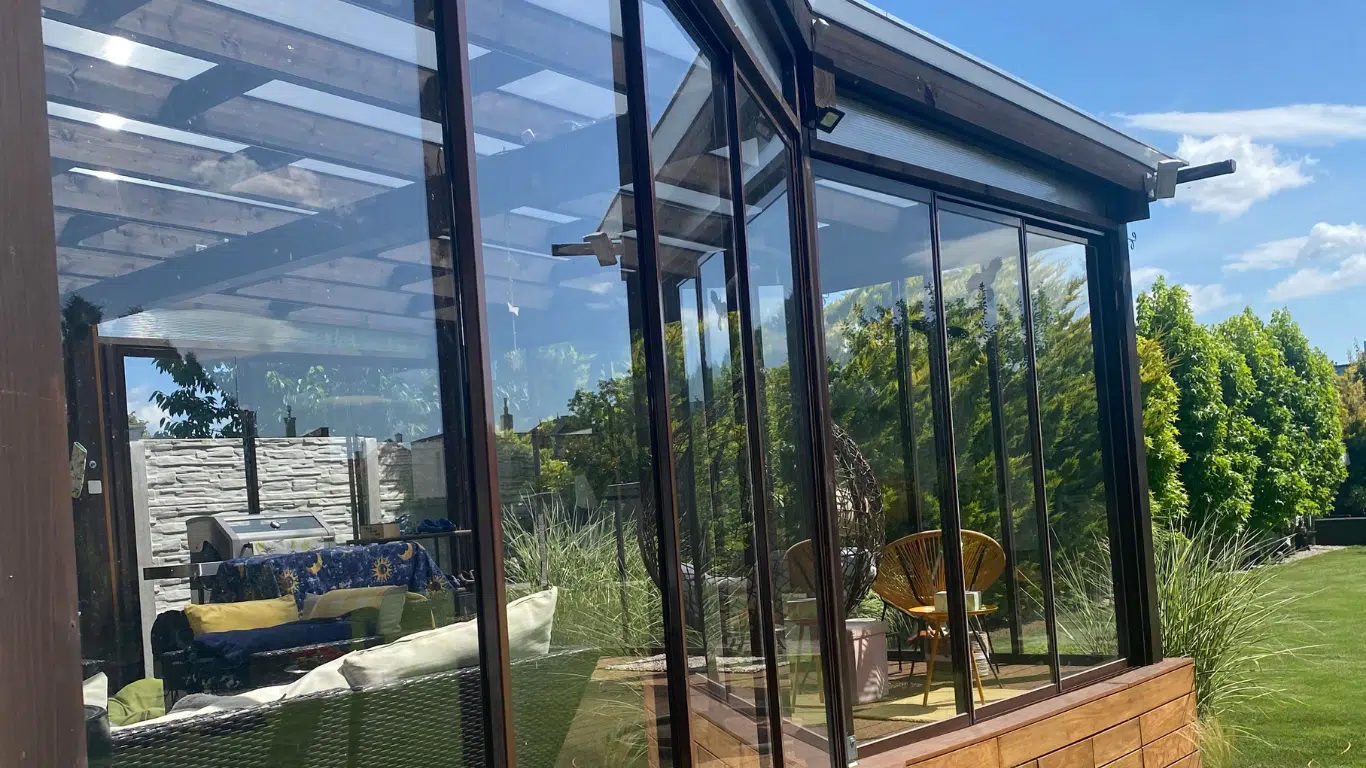
Quick answer: We wash windows, frames, pergolas and solar panels with demineralised water. With it, our TDS meter reads 0 ppm, meaning there are no dissolved minerals in the water to stay on the glass once it dries. That’s why we don’t squeegee or wipe the windows. They dry without limescale spots and without any cleaning product residue.
What is demineralised water?
Demineralised water is water that has had its dissolved minerals and salts removed. Depending on how it’s produced, it’s also called deionised water (ion exchange) or reverse osmosis water. We check the purity of our demineralised water with a TDS meter.
When demineralised water dries on glass, it evaporates and leaves nothing behind.
How does pure water cleaning work?
A brush and flowing water
We scrub the surface with a soft-bristled brush that demineralised water flows through. The brush loosens the dirt and the water rinses it away.
A thorough rinse
The final rinse is the most important part, so no loosened dirt is left on the glass. Then we leave the glass to dry on its own.
Height from the ground
At height we work with telescopic poles to reduce the risk of working from a ladder.
Heavy dirt
When windows are very dirty, we first wash them with a suitable cleaner and then rinse them with demineralised water.
We adapt the water temperature to the surface. We use warmer water on glass. On solar panels we choose the temperature according to the outside temperature, so the difference between the water and the panel is as small as possible.
Our test: 6 waters in ppm
We lined up 6 glasses of water and dipped the TDS meter into each one. All the waters looked equally clean, but the meter showed big differences.
| Water | Measured ppm |
|---|---|
| Mineral water | 1 570 |
| Baby water | 418 |
| Well water | 403 |
| Tap water | 348 |
| Rainwater | 4 |
| Demineralised water | 0 |
The values are approximate; this isn’t a laboratory analysis. For the mineral water, the display showed 157 with a ×10 sign.
What do TDS and ppm mean?
Total Dissolved Solids is the total amount of substances dissolved in water: calcium, magnesium, sodium, potassium, chlorides, sulphates and others. A TDS meter estimates it from how well the water conducts electricity.
Parts per million is the unit TDS is given in. For water, roughly speaking, 1 ppm is 1 mg of dissolved substances in 1 litre. So our tap water at 348 ppm has about 348 mg of dissolved substances per litre.
Does a TDS meter measure water hardness? No. Water hardness only expresses the calcium and magnesium content. TDS includes all dissolved substances, so hardness is part of it. Water with a high ppm is often hard too, but not always.
Why does tap water leave spots?
When water dries on glass, only the water itself evaporates. The dissolved substances stay on the glass as white spots and marks. It’s a similar deposit to the limescale in a kettle, made up of calcium and magnesium, for example. That’s why, with ordinary washing, the glass has to be squeegeed or wiped dry.
What ppm should water have for cleaning windows?
As close to zero as possible. The professional window cleaning equipment manufacturer Unger recommends that water used for pure water cleaning should not exceed 10 ppm.
Pure water or traditional cleaning with detergent and a squeegee?
Indoors we clean windows the traditional way, because flowing water can’t be used there. Outdoors we prefer demineralised water. In specific cases we combine both methods.
| Pure water cleaning | Traditional cleaning (detergent, squeegee) | |
|---|---|---|
| Spots after drying | No, the water leaves no minerals | No, if the glass is squeegeed thoroughly |
| Cleaning product residue | Not used for normal dirt | Can stay on the glass |
| Squeegeeing and wiping | Not needed | Needed |
| Corners, seals, frames | Flowing water rinses them | Dirt can be pushed into the corners |
| Working at height | From the ground, with a telescopic pole | Often from a ladder |
Solar panel cleaning
Panel manufacturers’ instructions agree on the basic rules:
- a soft brush, no abrasives
- water with minimal minerals
- lukewarm, not hot, water
- no pressure washer
That’s why we wash panels with demineralised water too, choosing its temperature according to the outside temperature, with a minimal difference between the water and the panel.
Solar panel cleaning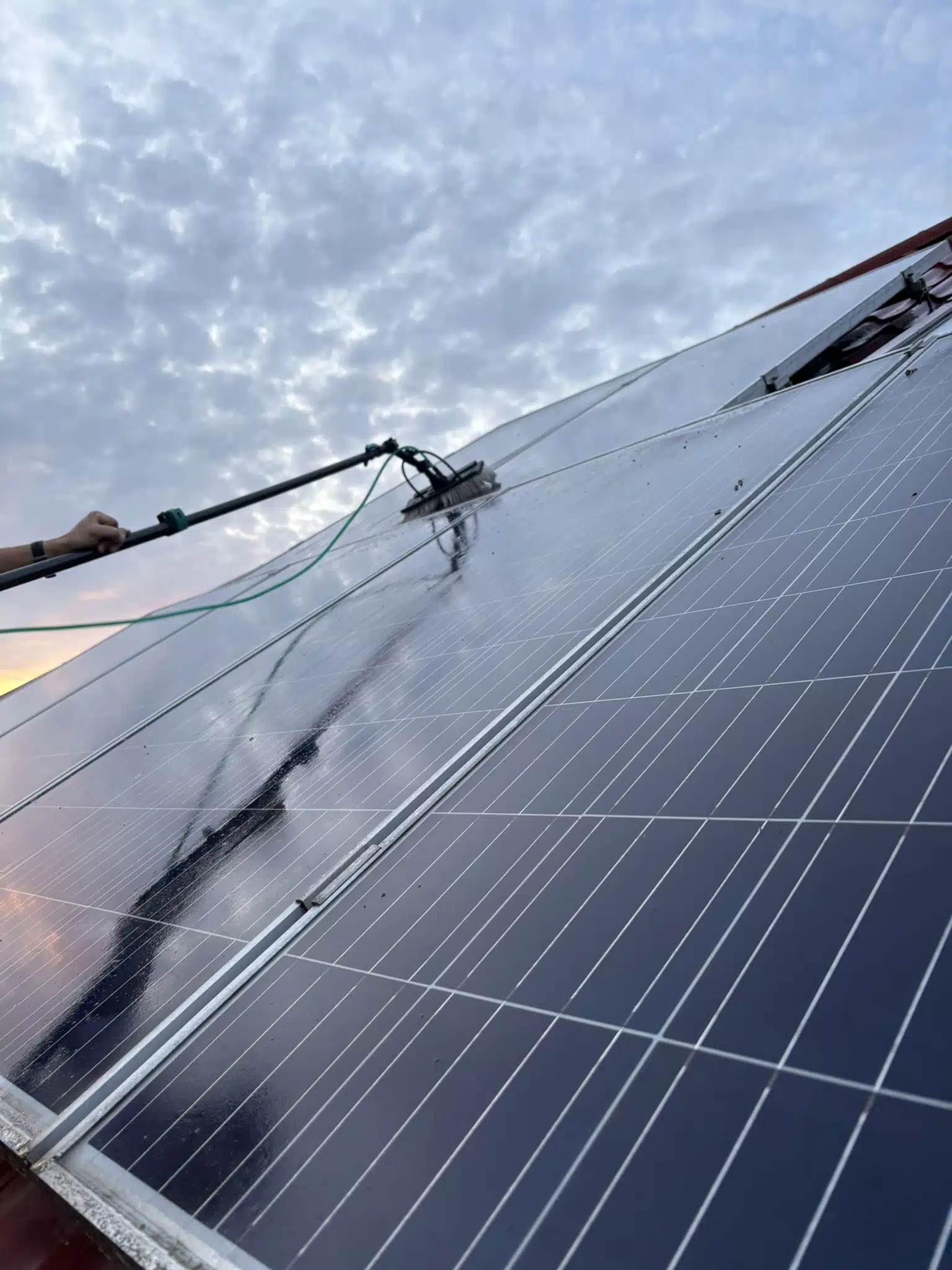
Frequently asked questions
Can I use rainwater instead of demineralised water?
With reasonable expectations, yes, for example on a car or a pergola. In our test, rainwater collected near Senec had 4 ppm. But the meter doesn’t show dirt that isn’t dissolved in the water, such as dust, pollen and soot. Rain picks them up from the air and they stay on the surface once it dries.
Is demineralised water suitable for drinking or for an iron?
It isn’t intended for drinking. The risks of drinking demineralised water long term are described, for example, in a publication by František Kožíšek of the National Institute of Public Health of the Czech Republic. Only use it in an iron or steam cleaner if the appliance manufacturer recommends it in the instructions.
What temperature is the water during cleaning?
We adapt the temperature to the surface. We use warmer water on glass, and on solar panels water suited to the outside temperature, with a minimal temperature difference. Panel manufacturers’ instructions recommend lukewarm, not hot, water.
Why don’t you squeegee windows after washing them with demineralised water?
Demineralised water contains no dissolved minerals that would stay on the glass once it dries. So we leave the glass to dry on its own.
Where we use demineralised water
 Window cleaning
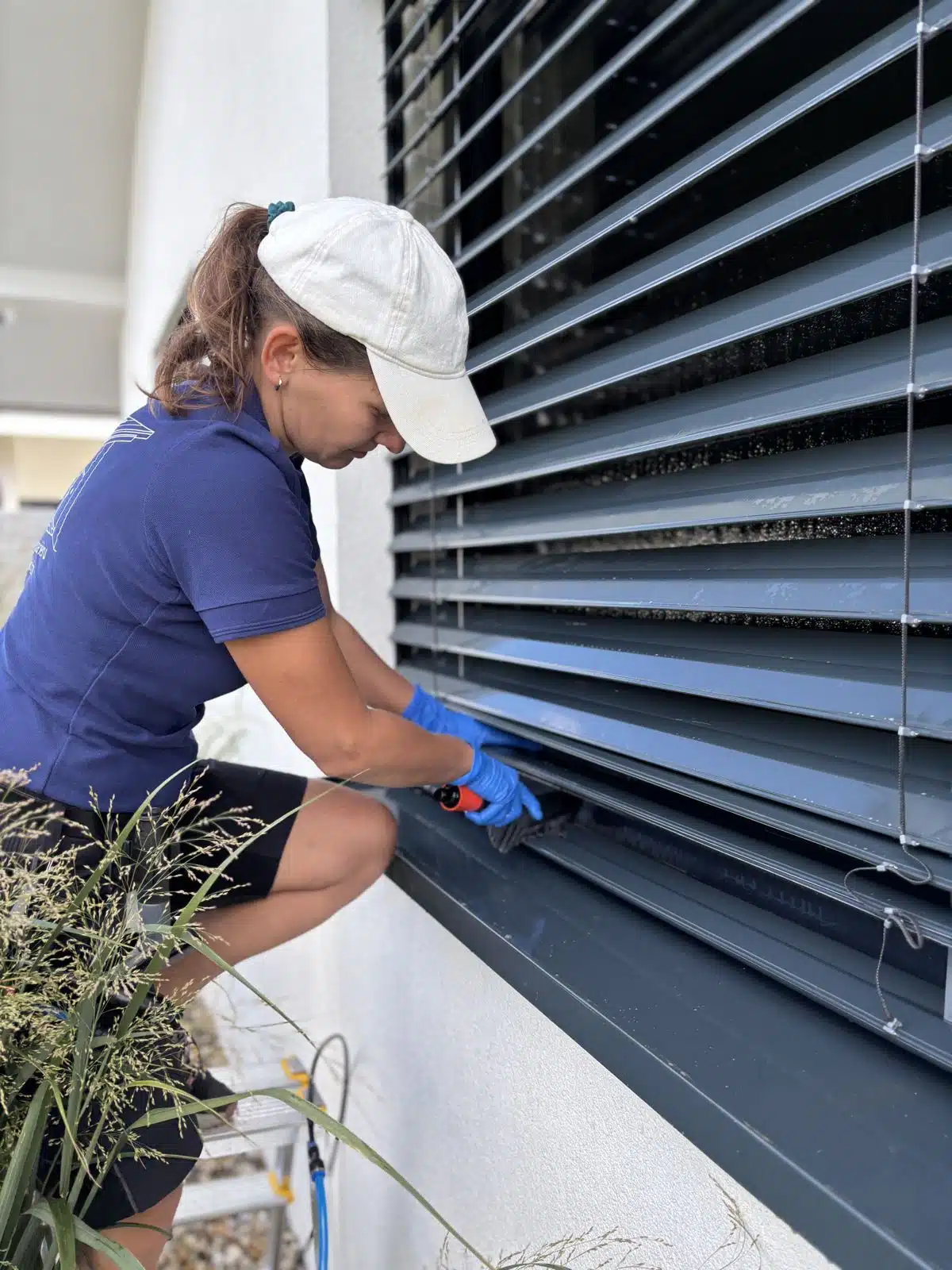 External blind cleaning

Want spot-free windows?
It’s always the two of us who come, husband and wife Betka and Patrik. Bratislava, Senec, Pezinok, Šamorín and the surrounding area.
Message Patrik on WhatsAppSources
- Unger: The 16 most common mistakes in pure water cleaning
- Health Canada: Total Dissolved Solids (TDS)
- Reagecon: Obtaining Accurate Readings with TDS Meters
- Futura Sciences: Is rain really to blame for dirty windows?
- F. Kožíšek: Health Risks from Drinking Demineralised Water
- Our own Gutt.sk test, October 2026
The Gutt.sk blog
Read more articles

Hard water stains on glass: why they form and how to remove them safely from windows
White spots and marks on your windows that won't go even after washing? We explain where limescale on glass comes from, how…
Read article
How to clean windows without streaks: why streaks form and how to prevent them
Why do windows still have streaks after washing? We explain the three causes, a step-by-step method and why professionals clean windows with…
Read article
Gutters in autumn: what happens when they get blocked and how to clean them
Leaves and pine needles in your gutters aren't just a cosmetic problem. We explain what a blocked gutter causes, how to tell…
Read article