
Block paving cleaning
Pressure cleaning with the dirty water vacuumed up straight away - no mud or puddles around your yard. Plus joint re-sanding and sealing, which protect your paving for years to come.
I'm interested in paving cleaningMessage or call Patrik directly: +421 952 455 762


Problems and solutions
What harms paving most - and how we deal with it
It's not just about looks. Neglected paving loses its stability, colour and safety. Here's exactly what we do about each of these problems.

Problem
The never-ending battle with moss and weeds
Ordinary household sprays and pulling weeds by hand only help for a few weeks. Unless the spores deep in the porous concrete are removed, the weeds quickly grow back.
How we deal with it
A professional covered rotary cleaner brings the paving back to its original shade under high, precisely controlled pressure - without damaging the surface or spraying the walls or garden.
Problem
Stubborn oil, barbecue and rust stains
Grease soaks deep into porous paving on a terrace or driveway. Rust from railings, plant pots or garden furniture also leaves dark marks that ordinary detergent or scrubbing won't remove.
How we deal with it
We don't tackle oil stains and rust with brute force that would damage the concrete. We use special grease absorbents and targeted rust removers that safely draw the dirt out of the pores to the surface - without damaging the structure or colour of the paving.

Problem
Unsightly white stains (efflorescence)
Lime and salt deposits spoil the look of even the most expensive paving. They cover its original pigment and make it look neglected.
How we deal with it
We use certified cleaning products made specifically for premium materials - they gently neutralise efflorescence without the risk of fading the paving's colour.

Problem
Rocking and sinking paving blocks
Amateur cleaning with the overly strong, unregulated point jet of an ordinary pressure washer flushes the stabilising sand out of the joints. After winter the paving starts to move and sink.
How we deal with it
We carefully sweep fine quartz sand of the right grade into the cleaned joints. It gives the paving its firmness back and locks it in place - 100 % stable.
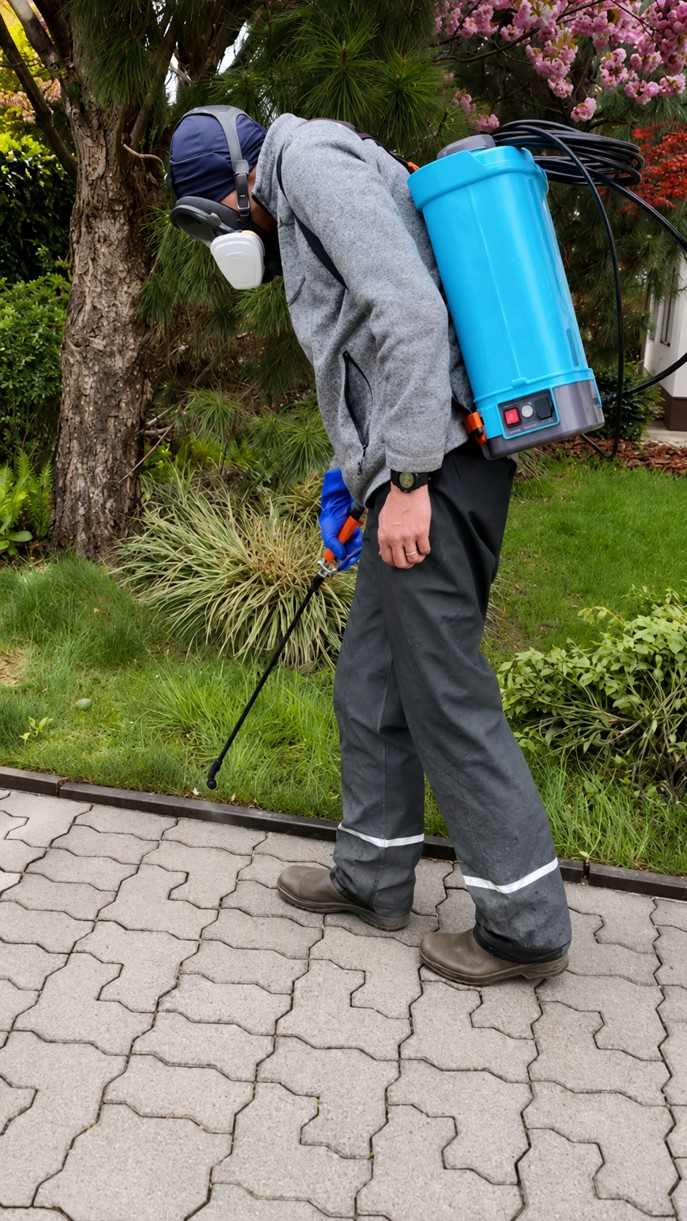
We recommend
Sealing for long-term protection
After re-sanding, we apply a protective nano-coating to the dry surface that penetrates deep into the concrete. It creates an invisible shield - water, oil and dirt simply run off instead of soaking in. The concrete also stops absorbing moisture, which protects it from cracking in frost.
Our process
How we clean block paving - 8 steps
No shortcuts. This is exactly what we do on every single job, from the first step to the final sealing.


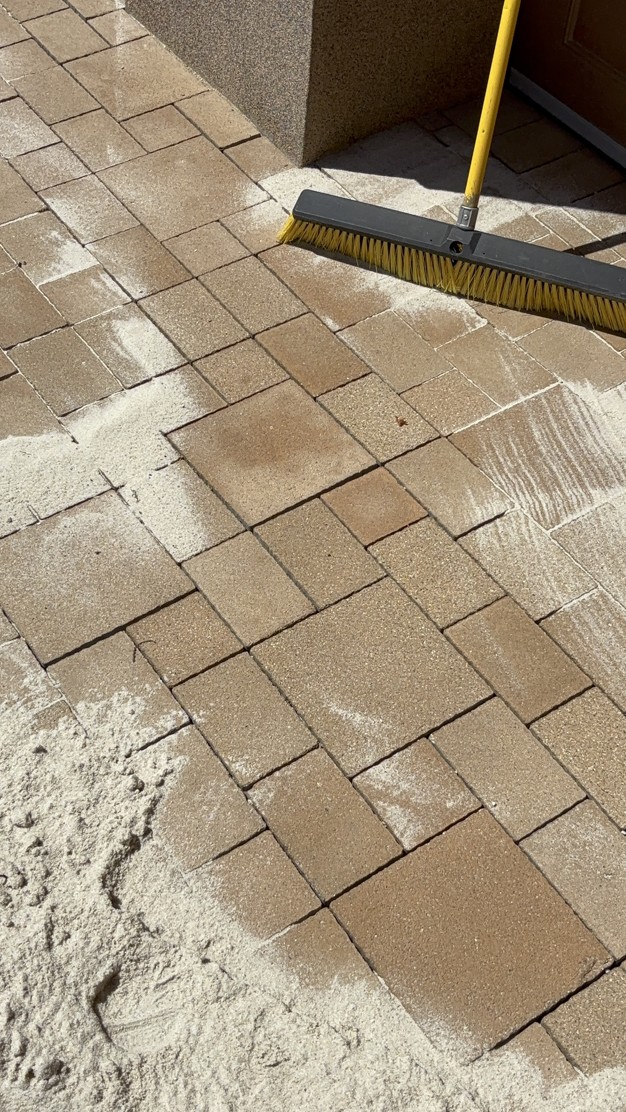
Site preparation
Removing debris
We sweep the area thoroughly and use industrial blowers to clear dust, soil and leaves so we don't create mud while cleaning.
Pre-treatment
Oxidising solution
A special solution immediately weakens the structure of moss, algae and lichen so that in the next step we can remove them more gently and more thoroughly.
Machine cleaning
Rotary cleaner
A professional covered rotary cleaner cleans the whole area evenly under high pressure - the cover protects walls, windows and the garden from splashes.
Detailed cleaning
High-pressure precision nozzle
Where the rotary cleaner leaves black dots and stubborn stains (plant pots, rust, oil), we finish off with a precision nozzle - a detail others skip.
Around the paving
Fence caps
Using the same high-pressure equipment, we also clean the fence caps and brick features around the paving so your yard looks clean and consistent.
Protection against spores
Biocide treatment
It penetrates deep into the pores and reliably destroys even the smallest mould and algae spores invisible to the eye - long-term prevention.
Re-sanding
Quartz sand
We sweep fine quartz sand of the right grade into the cleaned joints - it gives the paving its firmness back and locks it in place.
Sealing
Long-term protection
The protective coating penetrates the structure of the concrete and creates an invisible shield against water, oil and new dirt.
And we always tidy up at the end
We leave your lawn, flower beds and access paths as we found them. We only leave once the whole area around the house is clean.
Protecting your property
We're careful with your property
We know very well that high-pressure cleaning can make a real mess. Our aim is that, once we leave, the only thing that's clean is the surface we were cleaning.
Thorough protection and masking
Before we start the machines, we carefully go round the whole yard and use covers, sheets and barriers to protect everything that could get dirty - garage doors, the facade, doors, garden furniture and especially your delicate plants near the paving.
No mud splashes on the facade and no broken flowers in the beds.
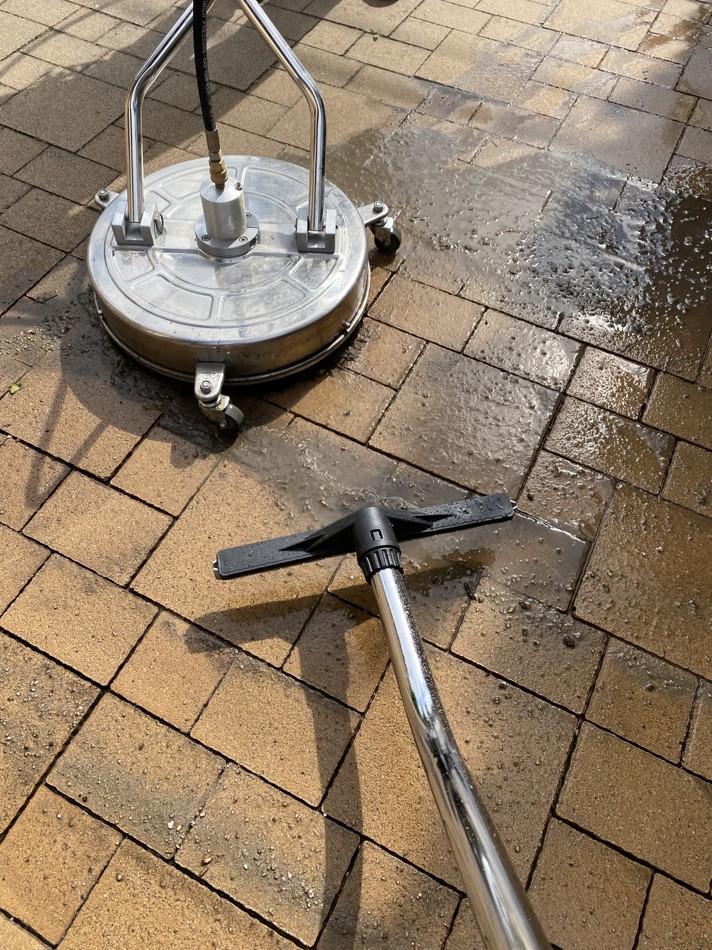
Dirt and water extracted at the same time
We don't let dirty water run freely across your yard. Alongside the cleaning machine we use an industrial wet vacuum that immediately sucks up loosened mud, moss and excess water right from the rotating head.
Your lawn, pool and low walls stay clean, with no flooding or water running under the gate.
Who looks after your paving
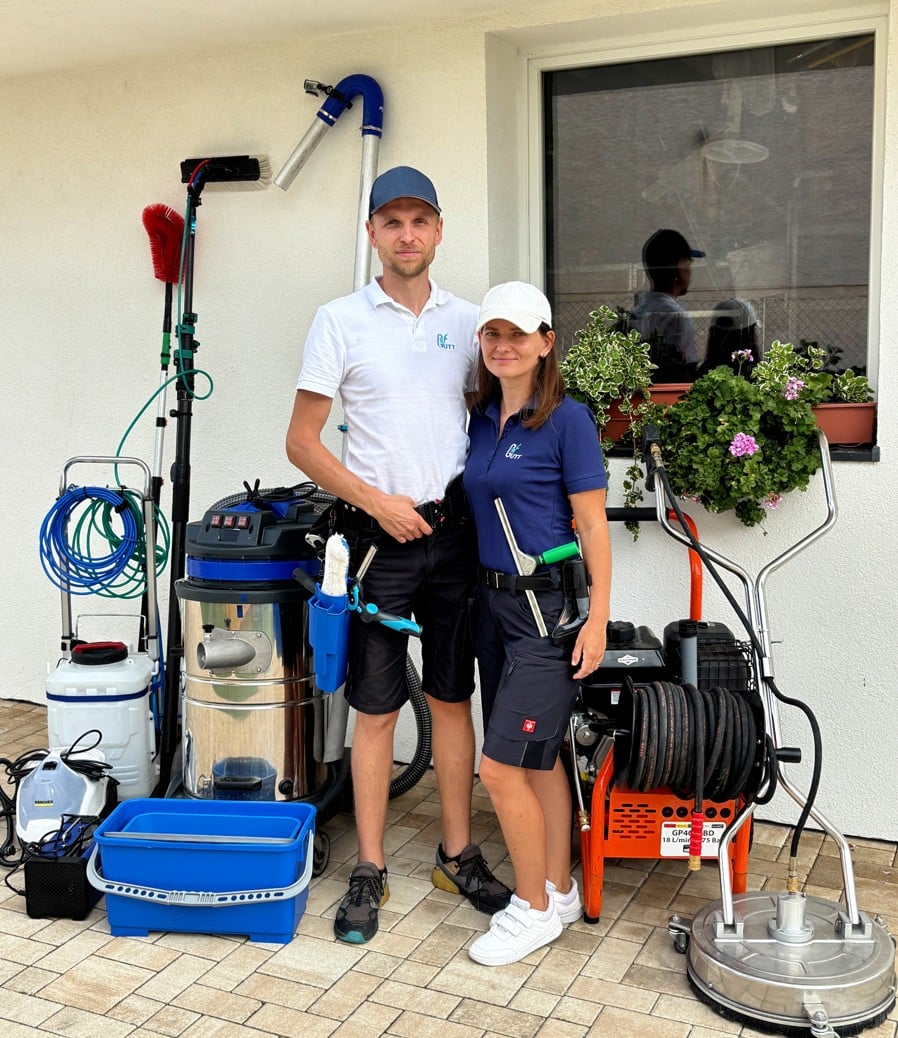
"We're Betka and Patrik - when you call, you talk directly to us, and when we come to your home, it's always the two of us, never an outside employee. We're looking for long-term partners whose exteriors we look after year after year - not one-off jobs. We get to know your house, your requirements and what matters most to you. And that's exactly why we're happy to keep coming back."
Betka and Patrik - your family business Gutt.sk
Prevention pays off
How often and when to clean paving
Professional organisations (including ICPI) recommend a deep clean every 2 to 3 years, ideally in the spring months. Prevention helps you avoid permanent damage to the concrete and saves you hundreds of euros in repairs.
Spring
After winter
We remove leftover road salt and deposits that act like sandpaper on paving. At the same time we deal with the first moss and weed spores - before they can take hold in the porous concrete.
Late spring / summer
Flowering season
Greasy, sticky pollen combined with dust forms a water-tight film on the paving, which algae later cling to easily.
Autumn
Falling leaves
Decaying leaves release natural tannins that can permanently stain porous concrete brown if they aren't removed in time.
All year round
Bird droppings and oil
They contain aggressive acids and substances that penetrate deep into the paving and cause local weathering and unsightly stains.
Prevention is 10× cheaper than repair. When windblown dust and organic waste settle in the joints, they form an ideal growing medium for weeds - whose roots can lift and push the blocks apart. And paving covered with a damp, microscopic film of algae turns into an ice rink in autumn and winter - so prevention is also a matter of safety, not just looks.
Frequently asked questions
What you most often ask
How long does it take to clean an average area of paving?+
The cleaning itself usually takes 4 to 8 hours, depending on how dirty it is and the services agreed. If you also order re-sanding and sealing, we split the work over two days - the paving needs to be completely dry before sealing so the coating soaks in properly.
Do I need to be at home during the cleaning?+
It isn't necessary. You just need to give us access to the paving and to water. Once we've finished, we'll be happy to send you photos of the result.
Will high-pressure cleaning damage the paving surface?+
Not with the right pressure and technique. We use professional rotary cleaners with precisely regulated pressure that clean evenly without damaging the surface of the concrete - unlike amateur cleaning with an ordinary pressure washer and its unregulated point jet.
Is sealing necessary or just recommended?+
It isn't necessary, but we strongly recommend it. Without sealing, paving gets dirty again faster and is more prone to efflorescence, moss and frost damage. With sealing, it stays clean much longer.
How often should paving be cleaned?+
We recommend a deep clean every 2 to 3 years, ideally in spring. The exact frequency depends on surrounding greenery, shade and how heavily the area is used.
Do you work outside Bratislava too?+
Yes, as well as Bratislava we also work in Senec, Pezinok and Šamorín. If you're not sure whether your area is covered, message us - we'll be happy to check.
We'll take care of the rest of the house too
We give the other surfaces around your house the same care we give your paving.


Not sure exactly what you need? Message us, we'll advise you →